AI · Product · Knowledge Systems
Knowledge
OS
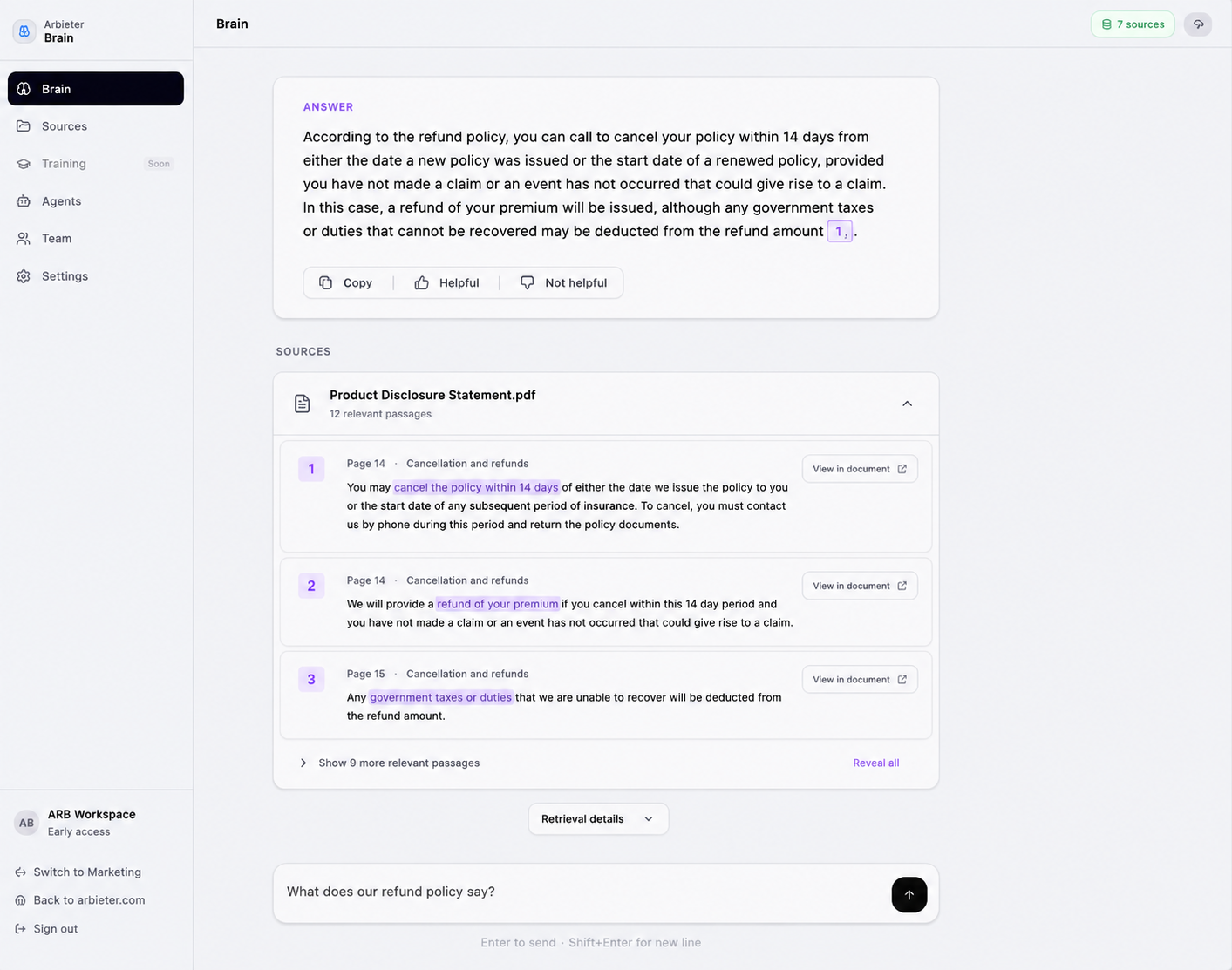
Unified search across documents, projects and internal knowledge. Helps teams find answers fast and capture insights for continuous improvement.
The Problem
Every team knows more than they can find.
Construction and architecture teams accumulate knowledge over years — in emails, in drawings, in specification documents, in project handover notes, in the heads of senior staff. Most of it is findable in theory and inaccessible in practice. Teams spend hours re-solving problems that were already solved on a previous project, or making decisions without the relevant precedent because it was buried in a folder no one knew to look in.
The Thinking
Search is only half of the problem.
Better search helps teams find what already exists. But the deeper issue is that institutional knowledge rarely gets captured at all — it lives in hallway conversations, in the expert judgment of senior team members, in the lessons learned informally at project end.
A knowledge system that only retrieves information will not improve over time. The second half of the problem is making it easy for teams to contribute back — to flag a useful answer, annotate a document, or record a decision in a way that accumulates into a searchable record.
The right system turns daily work into institutional memory, automatically.
What It Does
Four capabilities that compound.
01
Unified Search
One interface across documents, projects, emails and internal databases. No more knowing which tool holds which answer.
02
Contextual Answers
Ask in plain language. The system returns the relevant source — not just links — with the specific passage that answers the question.
03
Insight Capture
Team members annotate answers and flag emerging patterns. Institutional knowledge accumulates rather than evaporating.
04
Project Memory
Every project generates a searchable record. Lessons from past work surface automatically when a similar problem is identified.
The Outcome
The compounding effect.
Teams stop losing time to repetitive searches across disconnected tools.
New team members onboard faster — the knowledge is accessible, not locked inside senior heads.
Decisions become better-informed because relevant precedent is always findable.